Breath, Movement, Stillness: The Real Way I Found Balance Through Qigong
You know that constant low-level stress, the kind that sticks around no matter how much coffee you drink or sleep you miss? I did too—until I stumbled into qigong almost by accident. What started as a 10-minute curiosity turned into a daily ritual that reshaped my energy, focus, and how I move through the world. No hype, no miracles—just slow, intentional practice with real results. This is how I learned to work *with* my body, not against it. It wasn’t about burning calories or chasing endorphins. It was about restoring rhythm, reconnecting with breath, and finding stillness in motion. For anyone feeling stretched thin by life’s demands, this quiet practice became my anchor.
The Burnout That Led Me Here
For years, I believed that health meant pushing harder. I tracked workouts, counted steps, drank green smoothies, and prided myself on being “on it.” But beneath the surface, I was exhausted. Not the kind of tired that a weekend nap fixes, but a deep, persistent fatigue that made even small decisions feel overwhelming. My mind was often foggy, my shoulders permanently tense, and my sleep—though long—never felt restorative. I would wake up already bracing for the day, heart racing before my feet even touched the floor.
I wasn’t alone. Many women in their 30s, 40s, and 50s report the same quiet erosion of energy. The responsibilities pile up—family, career, household, aging parents—and self-care gets reduced to quick fixes: caffeine, quick workouts, or scrolling through a phone in bed. Exercise, while beneficial, often added to the strain. High-intensity routines left me sore and depleted, not refreshed. Yoga helped, but I struggled to quiet my mind during practice. I needed something different—something that didn’t demand more from me, but gave back.
The turning point came after a routine doctor’s visit. My blood pressure was slightly elevated, not dangerous, but a warning sign. I wasn’t overweight, didn’t smoke, and ate reasonably well. Yet my body was sending signals I could no longer ignore. My physician suggested stress management and better sleep hygiene, which sounded reasonable but vague. I wanted a tangible practice, something I could do every day that didn’t require equipment, a gym, or hours of time. That’s when I began searching for gentler forms of movement—ones that addressed not just the body, but the nervous system, the breath, and the mind.
That’s how I found qigong. Not through a trendy wellness influencer, but in a community center flyer tucked inside a library book. The description said, “Gentle movement for balance and vitality.” I almost walked past it. But something in me paused. I was tired of feeling like a machine that needed constant repairs. I wanted to feel like I belonged in my own body again.
What Qigong Actually Is (And Isn’t)
Before I stepped into that first class, I had misconceptions. I thought qigong was either mystical energy work or just slow tai chi for older adults. I was skeptical of anything that mentioned “energy flow” or “life force.” But what I discovered was far more practical and grounded. Qigong—pronounced “chee-gong”—is a centuries-old system rooted in traditional Chinese wellness practices. The word itself means “cultivating energy,” with *qi* referring to vital life force and *gong* meaning practice or skill.
At its core, qigong is a coordinated practice of breath, gentle movement, and mindful awareness. It’s not about flexibility, strength, or performance. You don’t need to touch your toes or hold a plank. It’s accessible to nearly everyone, regardless of age, fitness level, or physical condition. The movements are simple, repetitive, and often done standing or seated. What makes it powerful is the integration: each motion is synchronized with the breath, and attention is directed inward, creating a moving meditation.
Unlike yoga or stretching, qigong isn’t focused on stretching muscles or increasing range of motion—though those benefits may occur. Unlike aerobic exercise, it doesn’t raise the heart rate significantly. Instead, its goal is regulation: calming the nervous system, improving circulation, and enhancing the body’s natural healing capacity. Think of it as a daily tune-up for your internal systems. Over time, regular practice supports better sleep, improved digestion, and greater emotional resilience.
One of the most important realizations was that qigong doesn’t require belief to work. You don’t have to “feel energy” to benefit. Just as you don’t need to understand the mechanics of walking to enjoy a stroll, you don’t need to believe in *qi* to experience the effects. The science behind breathwork and mindfulness supports many of its benefits. Deep, rhythmic breathing activates the parasympathetic nervous system—the rest-and-digest response—lowering stress hormones like cortisol. Gentle movement increases blood flow without strain. And focused attention helps quiet mental chatter. Together, these elements create a powerful synergy that modern medicine is beginning to recognize.
Why This Practice Fits Where Others Fall Short
Most forms of exercise focus on output: how many calories burned, how fast you ran, how much weight you lifted. But qigong shifts the focus to input—what you’re giving your body in return. High-intensity workouts can be beneficial, but for someone already stressed or fatigued, they may add to the burden. The body interprets intense exertion as a form of stress, even if it’s self-imposed. Without adequate recovery, this can lead to burnout, inflammation, and hormonal imbalance.
On the other end of the spectrum are passive relaxation methods—watching TV, scrolling social media, or lying in a bath. These can be comforting, but they don’t actively engage the body’s self-regulating systems. They’re like turning off the alarm without addressing why it went off in the first place. Qigong, by contrast, is active restoration. It doesn’t just distract from stress—it helps the body reset its stress response.
The key lies in the combination of breath, movement, and attention. When you breathe deeply into the lower abdomen—what’s known as diaphragmatic breathing—you stimulate the vagus nerve, a major pathway of the parasympathetic nervous system. This sends a signal to the brain that it’s safe to relax. When you pair that with slow, intentional movement, you enhance circulation to muscles and organs, reducing stagnation and promoting detoxification. And when you focus your mind on the present moment, you interrupt the cycle of rumination and anxiety.
Studies on mindfulness and breathwork have shown measurable improvements in heart rate variability, blood pressure, and sleep quality—all markers of nervous system balance. While qigong-specific research is still growing, existing studies suggest benefits for chronic pain, fatigue, and mood regulation. The practice doesn’t replace medical treatment, but it complements it by supporting the body’s innate ability to heal and regulate itself. For women navigating hormonal shifts, caregiving stress, or the cumulative effects of long-term busyness, this kind of gentle, consistent practice can be transformative.
My First Real Breakthrough: Learning the Three Foundational Techniques
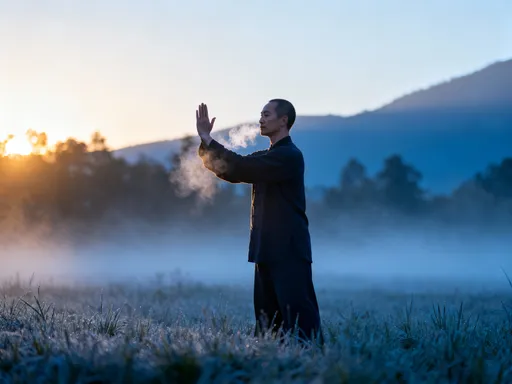
My first qigong class was humbling. The instructor, a calm woman in her 60s, guided us through three simple exercises. They looked easy. They were not. The first, *Standing Like a Tree* (Zhan Zhuang), involved standing with feet shoulder-width apart, knees slightly bent, arms rounded in front as if hugging a large ball. We held the posture for five minutes. My arms trembled. My mind raced. I felt awkward and exposed. But something shifted when I focused on my breath—slow, deep, and steady. After a few sessions, I began to notice a subtle warmth in my palms and a sense of groundedness I hadn’t felt in years.
The second movement, *Lifting the Sky*, involves raising the arms overhead on the inhale, as if gently pushing the sky upward, then lowering them on the exhale, palms facing down. The motion is slow, deliberate, and repeated five to ten times. At first, I focused on the mechanics—when to inhale, when to lower. But over time, I began to feel a stretching sensation along my spine and a release in my shoulders. The rhythm of the breath and movement created a meditative flow. I started doing this one at home, especially in the morning, as a way to wake up without caffeine.
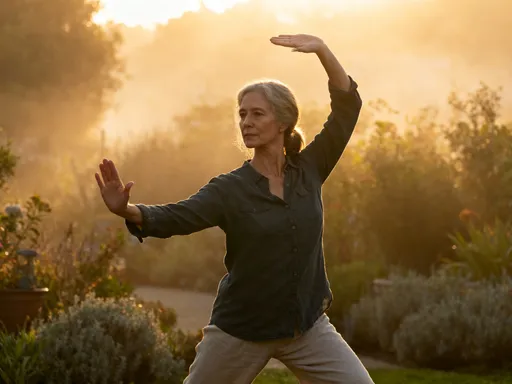
The third, *Separating Heaven and Earth*, involves one hand rising overhead, palm up, while the other lowers toward the floor, palm down, then switching sides. It’s a balancing motion, both physically and energetically. I found it particularly helpful after long hours at a desk. It reminded me to realign my posture and reconnect with my center. The instructor explained that the movement symbolizes harmony between opposing forces—up and down, effort and ease, giving and receiving. I didn’t need to believe in the symbolism to feel its effect. What mattered was consistency, not perfection.
These three techniques became my foundation. I didn’t master them overnight. Some days, my focus was scattered. Other days, I skipped practice altogether. But I learned to be patient. Progress wasn’t measured in how long I could hold a posture, but in how I felt afterward—calmer, clearer, more present. The breakthrough wasn’t dramatic. It was the quiet accumulation of small moments: a deeper breath, a straighter spine, a pause before reacting to stress.
How I Built a Routine That Actually Stuck
Like many women, I’ve tried—and abandoned—dozens of wellness routines. The problem wasn’t motivation. It was sustainability. I needed a practice that fit into real life, not one that required perfect conditions. Qigong worked because it was adaptable. I started with just five minutes a day, often right after brushing my teeth in the morning. I paired it with my coffee ritual—practice first, then brew. This small habit stack made it easier to remember and prioritize.
I also created a dedicated space. I cleared a corner of my living room, placed a small mat, and kept a loose-fitting outfit nearby. I didn’t need a meditation cushion or candles. Just a quiet spot where I could stand without distraction. On busy days, I practiced in the evening, sometimes in pajamas, before bed. The key was consistency, not duration. Even two minutes of mindful breathing counted.
Tracking progress was subtle. I didn’t use an app or journal. Instead, I noticed small shifts: I wasn’t reaching for snacks out of stress. I caught myself slouching and corrected my posture. I felt less reactive during family disagreements. These weren’t earth-shattering changes, but they added up. I began to see qigong not as another task on my to-do list, but as an act of self-respect. It was time I gave to myself, not because I had to, but because I deserved it.
Mindset played a crucial role. I stopped thinking of it as exercise and started seeing it as nourishment. Just as I feed my body food, I was feeding my nervous system calm. This shift in perspective removed the pressure to “perform” or “improve.” There was no failure in qigong—only showing up. Some days were more focused than others. That was okay. The practice met me where I was, every single time.
The Subtle Shifts That Added Up
The changes didn’t happen overnight. There was no sudden transformation. But over months, the small shifts became noticeable. My posture improved—not because I was trying to “stand tall,” but because my body naturally found better alignment. I became more aware of tension, especially in my neck and shoulders, and learned to release it with a few conscious breaths. I no longer carried that constant knot between my shoulder blades.
Sleep improved, too. I used to wake up multiple times a night, often anxious about the next day. Now, I fall asleep more easily and stay asleep longer. I attribute this to the evening practice of *Standing Like a Tree* or a few rounds of *Lifting the Sky* before bed. The slow rhythm signals to my body that it’s time to wind down. My breathing has deepened—I catch myself taking full, belly breaths during the day, even in stressful moments.
One memorable moment stood out. I was at the airport, facing a four-hour delay. In the past, I would have been furious—racing to find Wi-Fi, complaining to staff, doom-scrolling on my phone. This time, I found a quiet gate, stood up, and did three rounds of *Separating Heaven and Earth*. I focused on my breath, on the sensation of my feet on the ground. I didn’t solve the delay, but I remained calm. I watched my thoughts without reacting. Other travelers were stressed; I felt oddly peaceful. That was the moment I realized qigong had changed more than my body—it had changed my relationship with stress.
These aren’t exaggerated claims. I still have busy days, tough emotions, and physical aches. But I now have tools to navigate them. I’m not immune to life’s challenges, but I’m more resilient. I recover faster. I listen to my body more. And I’ve learned that balance isn’t a destination—it’s a daily practice.
Making It Your Own: Simple Ways to Start (And Keep Going)
If you’re curious about qigong, the best way to begin is simple: start small. Choose one movement—like *Standing Like a Tree*—and practice it for three to five minutes a day. Do it in the morning, before bed, or during a work break. Focus on your breath first. Let the movement follow. Don’t worry about getting it “right.” There’s no perfect form, only your form.
Use free online resources. Many certified instructors offer beginner-friendly videos on platforms like YouTube. Look for teachers who emphasize alignment, breath, and accessibility. Avoid those who make grand claims or use overly mystical language. This is a practical practice, not a performance.
Be patient. Don’t expect instant results. The benefits of qigong are cumulative. You may not feel much in the first week. That’s normal. Trust the process. Come back to it, day after day. Let go of comparison. Your practice is yours alone. Some days will feel easier than others. That’s part of the journey.
Avoid common pitfalls. Don’t rush. Don’t push through discomfort. If a movement causes pain, stop. Qigong should feel gentle, not strenuous. And don’t treat it as a cure-all. It’s a tool for balance, not a replacement for medical care. If you have chronic health conditions, consult your healthcare provider before starting any new practice. Qigong can be a supportive addition, but it’s not a substitute for professional treatment.
Remember, this isn’t about adding one more thing to your plate. It’s about creating space. Five minutes of qigong can be more nourishing than an hour of distracted multitasking. It’s an invitation to slow down, to breathe, to reconnect. And for women who spend so much of their lives caring for others, that invitation is a gift.
Final Thoughts: A Practice for Life, Not a Quick Fix
Qigong didn’t fix my life. But it changed how I live in it. It taught me to listen—to my breath, my body, my energy. It shifted my relationship with myself from one of constant pushing to one of gentle presence. I no longer see my body as something to be driven, but as a partner to be respected.
This practice isn’t flashy. It won’t give you six-pack abs or viral TikTok moments. But it offers something deeper: resilience, clarity, and a quiet sense of balance. It’s not a trend. It’s a tradition—one that has supported people for centuries through change, loss, and uncertainty. And now, it’s mine.
I don’t practice to achieve mastery. I practice to return—to myself, to the present, to stillness. I practice because it helps me show up as a calmer mother, a more focused worker, a more peaceful human. I practice because it reminds me that I am more than my to-do list.
If you’re feeling worn down, stretched thin, or disconnected, I invite you to try it. Not with expectations, but with curiosity. Begin with one breath. Then another. Stand quietly. Move slowly. Notice what arises. You don’t need special clothes, a studio, or years of experience. You just need the willingness to begin. And in that beginning, you might just find the balance you’ve been searching for.