Beyond the Obelisk: Hidden Architectural Gems in Yekaterinburg
You know that feeling when you stumble upon a building so striking, it stops you mid-step? In Yekaterinburg, beyond the usual postcard spots, there’s a quiet pulse of architectural magic hiding in plain sight. I didn’t expect to be wowed by industrial facades or Soviet-era details—but I was. These lesser-known landmarks aren’t just structures; they’re stories etched in steel and stone. Let me take you where most tourists don’t go, into the heart of a city that wears its history not on its sleeve, but in the texture of its walls, the curve of a balcony, the glint of morning light on copper domes. This is a place where function and beauty coexist, where the past is not preserved behind glass, but lived in, adapted, and reimagined.
The City Between Two Worlds: Why Yekaterinburg’s Architecture Defies Expectations
Yekaterinburg is more than a dot on the map between Europe and Asia—it is a living bridge between two worlds, both geographically and architecturally. Founded in 1723 as a major industrial hub in the Ural Mountains, the city grew not from royal ambition but from the demands of ironworks and metallurgy. Unlike the gilded palaces of St. Petersburg or the onion-domed cathedrals of Moscow, Yekaterinburg’s skyline emerged from necessity. Its buildings were designed to withstand harsh winters, support heavy industry, and house a growing workforce. Yet, within this utilitarian framework, a distinct architectural identity took root—one defined by resilience, innovation, and quiet elegance.
The city’s location in the central Urals shaped not only its economy but also its building materials. Local stone, granite, and iron were readily available, giving many structures a grounded, earthy quality. You can see this in the weight of 19th-century merchant houses, their facades carved from regional limestone, and in the rust-red patina of early 20th-century factory walls. The industrial legacy is not hidden—it is celebrated in the very fabric of the city. What surprises most visitors is how beauty emerges from this practical foundation. A wrought-iron balcony on a modest apartment block, a row of arched windows on a repurposed warehouse—these are not afterthoughts, but intentional gestures of craftsmanship.
Politically, Yekaterinburg has lived many lives: imperial workshop, revolutionary stronghold, Soviet industrial center, and now a modern Russian metropolis. Each era left its mark. Tsarist-era buildings reflect European neoclassical influences, while Soviet planning introduced wide boulevards and standardized housing blocks. Yet even under centralized control, local character persisted. Architects in the mid-20th century adapted national styles to the Ural context, using thicker insulation, steeper roof pitches, and wind-resistant designs. The result is a layered cityscape where no single style dominates, but where contrasts tell a richer story. To walk through Yekaterinburg is to move through time, not in grand monuments, but in the subtle shifts of brickwork, window shape, and roofline.
The Church on the Blood: Symbolism Woven into Structure
Rising like a vision from the city’s urban fabric, the Church on the Blood in Honour of All Saints Resplendent in the Russian Land is impossible to ignore. Completed in 2003 on the exact site where the Romanov family was executed in 1918, the church is more than a place of worship—it is a monumental act of remembrance. Its bright golden domes, painted in deep reds and blues, stand in stark contrast to the surrounding gray Soviet-era buildings, creating a powerful visual dialogue between past and present, sorrow and hope. The architectural language is deeply rooted in traditional Russian Orthodox design, yet executed with contemporary precision and emotional intensity.
The church’s layout follows the classic five-domed cruciform plan, symbolizing the five wounds of Christ. Each dome is topped with a gilded Orthodox cross, catching the light even on overcast days. The exterior is richly decorated with ceramic tiles, intricate mosaics, and carved limestone reliefs depicting saints and biblical scenes. Inside, the atmosphere shifts dramatically—soft candlelight reflects off gold-leafed iconostases, and the air carries the faint scent of incense. Visitors often report a sense of stillness, as if the building itself holds its breath. This is not accidental; the architects deliberately designed the space to evoke reverence and contemplation.
What makes the Church on the Blood particularly compelling is its relationship to the city around it. It does not isolate itself behind walls or elevated platforms. Instead, it sits at street level, integrated into the urban grid, inviting passersby to pause and reflect. The contrast between its ornate surface and the functionalist buildings nearby is jarring—and intentional. It reminds us that history is not neatly packaged; it intrudes, it disrupts, it demands attention. For many locals, the church is not just a memorial, but a symbol of national healing. For visitors, it offers a rare chance to witness how architecture can carry emotional and historical weight, transforming a tragic past into a space of beauty and dignity.
Constructivist Echoes: The Forgotten Beauty of Early Soviet Design
While much of Soviet architecture is dismissed as drab or uniform, Yekaterinburg holds treasures from a bolder, more experimental era: Constructivism. Emerging in the 1920s, this architectural movement sought to reflect the ideals of the revolution—progress, efficiency, and collective living. Buildings were designed not for ornament, but for purpose, with geometric forms, asymmetrical layouts, and raw materials like concrete and glass. In Yekaterinburg, several of these structures have survived decades of change, standing as quiet testaments to a utopian vision that once shaped the city’s future.
One of the finest examples is the former Workers’ Club on Lenin Avenue, a low-slung building with a dramatic horizontal ribbon window and a cantilevered staircase that appears to float. Though now repurposed as office space, its original design remains visible in the clean lines and functional layout. Another standout is the old Sanitary-Epidemiological Station, a stepped structure with circular porthole windows and a central tower that once housed a water reservoir. These buildings were not just practical—they were optimistic, designed to inspire a new way of living.
What’s remarkable is how these designs were adapted to the Ural environment. Unlike the flat plains of central Russia, Yekaterinburg’s hilly terrain and severe winters required modifications. Roofs were steeper to shed snow, walls thicker for insulation, and entrances sheltered from wind. Yet, even with these constraints, architects maintained the movement’s bold aesthetic. Exposed concrete frames, angular balconies, and functional stair towers became part of the city’s visual rhythm.
Today, preservationists are working to protect these endangered landmarks. Some buildings have been designated cultural heritage sites, but others remain at risk of demolition or insensitive renovation. Local advocacy groups organize guided tours and public lectures to raise awareness, emphasizing that Constructivist architecture is not just a relic, but a vital part of the city’s identity. For the observant traveler, spotting these structures—often tucked between modern developments—feels like uncovering a hidden code, a secret language of form and function that speaks to a time when architecture believed it could change the world.
Industrial Bones, Artistic Soul: Repurposed Factories and Warehouses
The soul of Yekaterinburg’s architecture lies not in its monuments, but in its ability to reinvent itself. Nowhere is this more evident than in the city’s transformed industrial spaces. Once the engines of Soviet production, vast factory complexes are now thriving cultural centers, galleries, and creative hubs. This adaptive reuse is not just practical—it is poetic, allowing the city to honor its past while embracing the future. One of the most inspiring examples is the redevelopment of peripheral buildings from the Ural Optical and Mechanical Plant, a Cold War-era facility that once produced precision instruments for military use.
Today, these cavernous halls host contemporary art exhibitions, design studios, and pop-up markets. The original steel trusses remain exposed, their rivets and beams telling the story of the building’s industrial past. Large skylights, once designed to maximize natural light for workers, now illuminate sculptures and installations. Rusted metal panels, cracked concrete floors, and faded factory markings are not hidden—they are celebrated as part of the aesthetic. The contrast between old and new is deliberate, creating a dynamic tension that energizes the space.
Visitors can explore these spaces during open studio events or cultural festivals, often held in the spring and autumn. The atmosphere is informal and welcoming, with local artists offering guided tours and coffee stands serving traditional Ural pastries like pirozhki and vatrushki. Accessibility has been carefully considered—ramps and elevators ensure that the buildings are open to all, while preserved machinery sometimes doubles as sculptural elements. These sites are not museums frozen in time; they are living, evolving spaces where history is not just remembered, but reinterpreted.
Another notable project is the conversion of a former textile warehouse into a multidisciplinary arts center. With its high ceilings and wide wooden floors, the building now hosts dance rehearsals, theater performances, and film screenings. The renovation respected the original structure, using sustainable materials and energy-efficient systems. Nearby cafés and bookshops have sprung up, creating a vibrant neighborhood around what was once a forgotten corner of the city. These transformations show that industrial heritage, far from being a burden, can be a foundation for creativity and community.
Hidden Facades: Ornamentation in the Most Unexpected Places
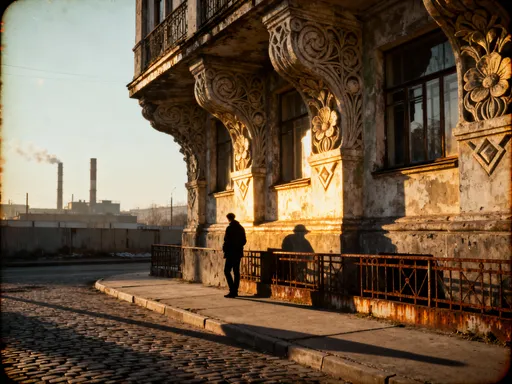
If Yekaterinburg’s grand structures tell the city’s official history, its hidden details whisper its personal stories. Turn down a quiet side street in the historic center, and you might find a 19th-century merchant’s house with a delicate stone carving of grapevines above the door—symbolizing prosperity and abundance. Walk past a 1950s cinema, and look up: a bronze relief of dancers and musicians adorns the façade, a remnant of Soviet cultural optimism. These small acts of artistry are everywhere, if you know where to look.
A self-guided walking tour through the city’s central districts reveals a treasure map of such moments. On Malysheva Street, a series of pre-revolutionary apartment buildings feature wrought-iron balconies with floral motifs, each slightly different, as if the blacksmith had a story to tell. On Karl Liebknecht Street (now part of the city’s renamed grid), a crumbling plaster façade reveals traces of painted frescoes beneath decades of grime—ghosts of a more ornate past. These details were not meant for grandeur; they were expressions of pride, identity, and craftsmanship in everyday life.
The joy of discovering these elements lies in the slowness of the experience. This is not sightseeing at checklist speed, but a mindful exploration. Take the time to look up, to pause, to notice the curve of a cornice or the pattern of a bricklay. You’ll begin to see that even the most ordinary building might hold a surprise—a carved owl symbolizing wisdom, a mosaic of local flora, a metal gate shaped like mountain peaks. These details are not preserved under glass; they are part of the living city, exposed to weather and time, yet still speaking.
Photographers and artists have long been drawn to these micro-moments, capturing them in books and exhibitions. But you don’t need a lens to appreciate them. All you need is curiosity. And in doing so, you participate in a quiet act of preservation—not by restoring, but by noticing. When we see these details, we affirm their value. In a city that has seen so much change, these small beauties are acts of resistance against forgetting.
Modern Contrasts: How New Buildings Respond to the Past
Yekaterinburg’s architectural story is not frozen in the past. New constructions continue to emerge, but the most compelling ones do not erase what came before—they converse with it. A growing number of contemporary buildings are designed with a deep respect for the city’s history, using materials, proportions, and motifs that echo earlier styles while remaining unmistakably modern. This dialogue between old and new is reshaping the city in thoughtful, sustainable ways.
One striking example is the business center on Voevodina Street, whose façade incorporates a laser-cut metal screen inspired by traditional Ural lace patterns. By day, the screen casts intricate shadows across the lobby; by night, it glows like a modern icon. The design pays homage to local craftsmanship while serving a functional purpose—sun shading and energy efficiency. Another is the residential tower on Komsomolskaya Street, whose vertical silhouette mirrors the spires of Orthodox churches, creating a subtle skyline reference without imitating religious architecture.
These designs reflect a shift in architectural philosophy. Younger firms are moving away from imported international styles and instead seeking a regional identity—one rooted in the Urals’ natural landscape, industrial heritage, and cultural traditions. They use local stone, recycled metal, and green roofs to reduce environmental impact. Public spaces are integrated into developments, with courtyards, pedestrian pathways, and public art installations fostering community.
Not all new buildings succeed in this balance. Some critics argue that certain projects prioritize aesthetics over authenticity, creating pastiche rather than meaningful dialogue. Yet the trend is clear: there is a growing desire to build not just for the present, but for continuity. When done well, these structures become bridges—between generations, between styles, between memory and progress. They remind us that the future of architecture is not about rejecting the past, but about listening to it.
Planning Your Own Architectural Discovery: A Practical Local’s Guide
Exploring Yekaterinburg’s architectural layers is not just for experts—it’s an experience within reach of every thoughtful traveler. The key is to slow down, look closely, and plan with intention. The best time to visit is from late August to early October, when the golden light of autumn enhances the textures of stone and metal, and the snow has not yet made sidewalks treacherous. Spring, from May to early June, offers milder weather and blooming linden trees along the streets, adding a soft contrast to the city’s hard edges.
Walking is the ideal way to discover the city’s hidden gems. Start in the historic center, near the Iset River, and follow a route that includes Ulitsa Malysheva, Ulitsa Lenina, and the quieter side streets of the original factory districts. Wear comfortable shoes—cobblestones and uneven pavement are common. Public transportation is reliable and scenic; the city’s tram network offers elevated views of certain neighborhoods, particularly Line 4, which passes through older residential areas with preserved pre-Soviet buildings.
When photographing architecture, especially residential buildings, be respectful. Avoid using flash at night or photographing inside private courtyards. If you see a detail you love, consider sketching it or writing a note—sometimes the best memories are made without a camera. Support local culture by visiting independent galleries, buying from artisan markets, and dining at cafés that use regional ingredients.
Most importantly, approach the city with curiosity and humility. Yekaterinburg does not reveal its secrets all at once. Its beauty is in the details, the contrasts, the quiet moments of recognition. By walking its streets with attention, you become part of its ongoing story—not as a tourist checking off sights, but as a witness to a living, breathing city that continues to build, remember, and reimagine itself.