Island Time, Mekong Style: Where the River Breathes Slow
You know that feeling when time just… stops? That’s Don Det in the 4,000 Islands of Laos. No crowds, no rush—just hammocks strung between palms, bikes on sandy paths, and the Mekong lazily carving through emerald islets. I came for peace, stayed for sunsets that painted the sky in mango and rose. This isn’t just travel—it’s recharging your soul in one of Southeast Asia’s most serene corners. Here, life doesn’t follow a schedule; it follows the river. The current sets the pace. Days unfold without urgency, measured not in minutes but in the rhythm of paddles dipping into still water, the creak of a bamboo raft, or the slow arc of a fisherman’s net. In a world that never sleeps, this archipelago offers something rare: the permission to simply be.
Traveler’s Pulse: How 4,000 Islands Rewires Your Rhythm
The journey to the 4,000 Islands—Si Phan Don in Lao—is part of the transformation. Most travelers arrive after a long but scenic bus ride from Pakse, winding through rubber plantations and rice fields that shimmer under the sun. From the mainland town of Muang Khong, the final leg is a short boat crossing, and that’s when the modern world begins to dissolve. The engine’s hum fades; the air grows thick with the scent of wet earth and blooming jasmine. As the boat glides toward Don Det, the first island most visitors choose, the shoreline reveals itself: wooden docks, stilted guesthouses with corrugated roofs, children waving from the banks, and dogs napping in the shade of banana trees. There are no taxis, no honking horns—just the lap of water against the hull and the distant call of a rooster.
Upon stepping onto the island, the absence of cars is immediately noticeable. Transportation here is by foot, bicycle, or the occasional electric golf cart used by locals. Bicycles can be rented for less than two dollars a day, their tires slightly deflated for better grip on sandy trails. These paths wind through coconut groves, past family compounds with chickens scratching in the dirt, and alongside small gardens bursting with papaya, lemongrass, and chili peppers. The pace is dictated by the heat of the day, the pull of a hammock, or the promise of fresh coconut water served in a cut-open shell. There’s no need to rush—nowhere to be, really. This deliberate slowness isn’t a limitation; it’s the essence of the experience. The island doesn’t demand your attention. It invites you to notice.
First Glimpse: Crossing into the Mekong’s Heart
The Mekong River at this point is no longer a single channel but a vast, braided network of waterways slicing through hundreds of islands and islets. The 4,000 Islands is a poetic exaggeration—there aren’t quite four thousand—but the archipelago feels infinite in its quiet sprawl. The river here is wide, powerful, and yet paradoxically gentle. As you cross from the mainland, the landscape opens into a panorama of green: islands cloaked in jungle, herons standing motionless in shallow waters, and the occasional water buffalo wading through flooded fields. The boat ride itself is a meditation, with the breeze cooling your skin and the sun casting long reflections on the surface.
Don Det and Don Khon, the two most visited islands, sit side by side, connected by a small bridge built during the French colonial era. This bridge, now rusted and simple, once carried a railway meant to bypass the Khone Phapheng Falls—the largest waterfall by volume in Southeast Asia. Today, it carries only foot traffic and bicycles, linking two worlds that feel both separate and deeply connected. Don Det is the gentler of the two, known for its relaxed atmosphere and cluster of guesthouses and cafes along the main path. Don Khon, slightly larger and more forested, offers a bit more history and exploration, with remnants of colonial buildings and trails that lead to secluded waterfalls.
First impressions are shaped by silence—relative, of course. There’s the hum of cicadas, the occasional shout of children playing, and the rhythmic clang of a spoon against a metal pot from a riverside kitchen. But there’s no background noise of traffic, no blaring music from shops, no pressure to perform or produce. Time doesn’t disappear here; it stretches. The sky changes color slowly. Shadows grow long and soft. And as the sun dips below the horizon, the river catches fire in hues of gold and pink, a daily spectacle that draws quiet gatherings of travelers to the water’s edge.
The Art of Doing Nothing: Hammocks, River Views & Island Hops
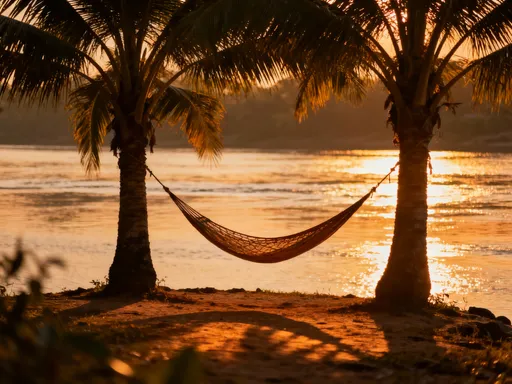
In a culture that often equates productivity with worth, doing nothing can feel radical. On Don Det, it’s not only accepted—it’s celebrated. The art of stillness is practiced daily, perfected in the simple act of lying in a hammock strung between two palm trees, a book unread on your chest, your eyes half-closed as you watch the river flow. There’s no guilt in idleness here. Instead, there’s a deep sense of permission—to rest, to breathe, to simply exist without agenda.
Many guesthouses offer hammocks on private decks or communal platforms overlooking the water. Some are basic—woven nylon stretched between ropes—while others are more luxurious, with wooden frames and mosquito nets. Wherever they’re placed, they become sacred spaces. It’s not uncommon to spend an entire afternoon in one, lulled by the sound of the current, the occasional splash of a jumping fish, or the distant laughter of children. This isn’t laziness; it’s presence. The mind, unburdened by emails or to-do lists, begins to recalibrate. Thoughts slow. The body unwinds. And in that space, clarity often emerges.
For those who feel the need to move, gentle exploration enhances rather than disrupts the stillness. Biking across Don Det takes less than an hour, but most people stretch it into a morning or afternoon, stopping to watch a family mend fishing nets, to sip strong Lao coffee at a roadside stall, or to dip their feet in a shaded pool. Island hopping is easy and affordable. A five-minute boat ride can take you to Don Khon, where the energy of the river feels stronger near the falls. Or you can venture to Don Som, a quieter island known for its turtle conservation program and minimal development. Each island has its own rhythm, but none demand speed. The goal isn’t to see everything—it’s to feel the place.
Why This Place Works: The Science of Slow Travel
The restorative power of the 4,000 Islands isn’t just poetic—it’s supported by science. Studies in environmental psychology consistently show that exposure to natural settings reduces cortisol levels, lowers blood pressure, and improves mood. The Mekong archipelago offers a near-perfect environment for such benefits. The absence of urban noise, artificial lighting, and digital distractions creates what researchers call a ‘soft fascination’—a state where the mind is engaged enough to feel calm but not so stimulated that it becomes fatigued.
The **Mekong’s flow** acts as a natural white noise, masking jarring sounds and creating a soothing auditory backdrop. The visual landscape—endless water, swaying palms, and open sky—engages the brain in a gentle, restorative way. Unlike the overstimulation of cities or even busy tourist spots, this environment allows the prefrontal cortex—the part of the brain responsible for decision-making and stress regulation—to rest. The result is mental clarity and emotional balance.
Moreover, the lack of reliable Wi-Fi and limited electricity on some islands forces a digital detox. Without constant notifications, travelers naturally fall into a more rhythmic daily pattern: waking with the sun, eating when hungry, resting when tired. This alignment with natural circadian rhythms further supports well-being. Community-based tourism also plays a role. Interacting with local families, sharing meals, and witnessing traditional ways of life fosters a sense of connection and belonging—key components of psychological health. The 4,000 Islands don’t offer luxury spas or wellness retreats, but they provide something more authentic: a chance to heal through simplicity.
Choosing Your Island: Don Det vs. Don Khon vs. Don Som
Each island in the Si Phan Don group offers a slightly different experience, making it easier for travelers to find the right fit for their temperament and travel style. **Don Det** is ideal for those seeking ease and comfort without sacrificing authenticity. It has the highest concentration of guesthouses, ranging from basic bamboo bungalows to more spacious eco-lodges with private bathrooms. Restaurants line the main path, serving Lao staples like laab (minced meat salad), grilled river fish, and sticky rice. The atmosphere is communal and friendly, with travelers often sharing tables and stories. It’s perfect for solo travelers, couples, or small families who want a balance of solitude and social connection.
**Don Khon**, just a short bridge away, offers a bit more history and mild adventure. The French colonial ruins—a former railway station, an abandoned villa, and remnants of a hydroelectric plant—hint at a past ambition to harness the river’s power. The island also provides access to the upper and lower viewpoints of the Khone Phapheng Falls, where the Mekong churns through rocky channels in a thunderous display of force. Trails lead through dense forest to smaller waterfalls like Li Phi and Somphamit, where the water cascades in gentle tiers. Don Khon attracts travelers who enjoy light hiking and historical curiosity but still want to return to a peaceful base each evening.
For those seeking deeper solitude, **Don Som** is the quietest of the three. With only a handful of guesthouses and no roads—just footpaths—it’s a place to disconnect completely. The island is home to a conservation project focused on the Siamese mud turtle, an endangered species native to the Mekong. Visitors can learn about breeding efforts and even participate in guided releases during certain seasons. Don Som is best for travelers who value privacy and are comfortable with minimal amenities. Meals are simple and locally sourced, often eaten on a porch with nothing but the sound of the river for company. It’s not for everyone, but for those who choose it, Don Som offers a rare kind of peace.
Beyond the Hammock: Gentle Adventures That Don’t Break the Spell
Even in a place designed for stillness, gentle movement enhances the experience. Walking trails on Don Khon wind through coconut plantations and rubber groves, their paths dappled with sunlight. These aren’t strenuous hikes—most are under two miles—but they offer a different perspective on island life. Along the way, you might pass a family harvesting fruit, a woman weaving a basket from palm leaves, or a man repairing a wooden fishing boat. These moments of quiet observation create a deeper understanding of the local way of life.
One of the most cherished experiences in the area is visiting a village to watch traditional weaving. Lao textiles are renowned for their intricate patterns and natural dyes, and several families on Don Khon and Don Det continue this craft. Visitors are often welcomed into open-air homes where women sit at wooden looms, their hands moving with practiced precision. The process is slow and deliberate—just like life here. You can ask questions, take photos (with permission), and even purchase a scarf or table runner directly from the weaver. These small exchanges support local livelihoods and create meaningful connections.
Another unforgettable experience is the chance to see the **Irrawaddy dolphins**, a rare and endangered species that inhabits a stretch of the Mekong near the Cambodian border. A short boat ride from Don Det takes you to the observation point, where guides point out the dolphins’ distinctive rounded heads and shy movements. They’re not trained performers; they’re wild animals going about their lives. Watching them surface briefly, then disappear into the murky water, is a humbling reminder of nature’s quiet resilience. The boat drivers keep a respectful distance, ensuring minimal disturbance. This isn’t a spectacle—it’s a privilege.
Staying Right: Eco-Stays, Local Eats & Respectful Tourism
Sustainability isn’t a buzzword here—it’s a necessity. The islands’ charm depends on preserving their natural beauty and cultural integrity. Most accommodations are family-run, built with local materials and designed to blend into the landscape. Many use solar power for lighting and rely on rainwater collection. Toilets are often composting or septic systems that minimize environmental impact. While amenities are simple—cold showers, shared bathrooms, fans instead of air conditioning—these choices reflect a commitment to low-impact living.
Dining is equally grounded in locality. Restaurants, often open-air pavilions with bamboo tables, serve food sourced from nearby farms and the river itself. Breakfast might be sticky rice with boiled eggs and strong coffee sweetened with palm sugar. Lunch could be a fragrant green papaya salad with grilled catfish. Dinners often feature dishes cooked over charcoal, their smoky aroma mingling with the evening air. There’s little imported food—what you eat is what grows or swims here. This not only supports local farmers and fishers but also reduces the carbon footprint of your stay.
Travelers are encouraged to follow a few simple principles to be respectful guests. Dress modestly, especially when visiting villages or temples—shoulders and knees covered. Always ask before taking photographs of people, particularly children. Carry cash, as credit cards are not accepted anywhere. Support local businesses by eating at family-run restaurants, buying handicrafts directly from artisans, and choosing local guides for tours. These small actions help ensure that tourism benefits the community rather than exploiting it. The goal isn’t to leave no trace—it’s to leave a positive one.
Leaving Changed: Carrying the Island Mindset Home
When it’s time to leave the 4,000 Islands, the transition back to the faster world can feel jarring. The noise, the speed, the constant demands—it all returns with a rush. But something has shifted. The memory of the river’s rhythm stays with you. You begin to notice moments of stillness in your daily life: the steam rising from your morning tea, the way light filters through the trees on your walk, the sound of your own breath when you pause.
The **4,000 Islands** are more than a destination—they’re a state of mind. They remind us that peace isn’t found in grand gestures but in small, intentional acts: sitting quietly, listening deeply, moving slowly. They teach that time isn’t something to conquer but to inhabit. And they show that true luxury isn’t in opulence but in the freedom to be present.
As travelers, we have a responsibility to protect places like this. By choosing mindful travel—by respecting cultures, supporting local economies, and treading lightly—we help ensure that such sanctuaries remain. But we can also bring the island mindset home. Take a five-minute pause before checking your phone. Eat a meal without distractions. Say no to one unnecessary obligation. These small rebellions against speed are acts of self-care and resistance.
The Mekong flows on, carving its path through stone and time. And somewhere, on a quiet islet, a hammock swings between two palms, waiting for the next traveler ready to slow down, breathe deep, and remember what it means to be still.