Wandering Through Fire and Stone: Arusha’s Wild Terrain Speaks
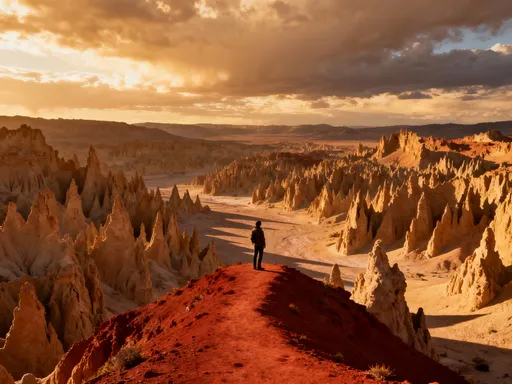
You know what? I didn’t expect Arusha to hit me so hard. Sure, I’d heard of Tanzania for safaris and Kilimanjaro, but this place—where volcanoes sleep and the earth cracks open—feels like walking on another planet. From the first step onto its rust-red soil, I was hooked. The landscape here isn’t just scenery; it’s alive, raw, and whispering stories of fire, time, and transformation. If you're craving real, untamed earth under your feet, you gotta check this out.
The Gateway to Earth’s Drama
Arusha is often described as a transit point—a bustling town where travelers refuel before ascending Mount Kilimanjaro or embarking on Serengeti safaris. But to see Arusha only as a stopover is to miss its deeper essence. Nestled at the base of Mount Meru and cradled by the tectonic forces of the East African Rift, Arusha sits at the heart of one of Earth’s most dynamic geological zones. Its position is not just geographical; it’s elemental. The city pulses with energy that radiates from the land itself, where red soil, volcanic peaks, and open skies converge in a landscape shaped by fire and fracture.
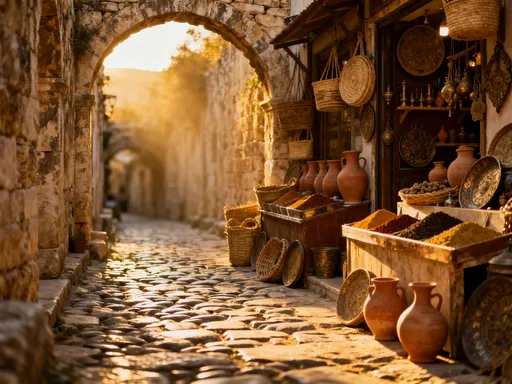
As visitors leave the town’s market lanes and winding roads behind, the terrain begins to shift. Dusty pathways lead into savannahs dotted with acacia trees, then climb toward forested slopes and rocky outcrops. This transition—from urban rhythm to wild terrain—is part of Arusha’s unique appeal. Unlike destinations that deliver instant spectacle, Arusha reveals itself gradually. It invites patience, observation, and a willingness to listen. The air grows cooler, the silence deeper, and the sense of being on ancient ground becomes unmistakable. This is not just a backdrop for adventure; it is a living archive of Earth’s creative power.
What makes Arusha especially compelling is how seamlessly human life intertwines with this dramatic environment. Local farmers cultivate terraced fields on volcanic slopes, drawing fertility from ash-rich soil. Herders guide cattle through grasslands framed by distant peaks. Even the architecture—low buildings with red-tiled roofs—echoes the color of the earth. There’s a harmony here, a quiet understanding between people and planet, that adds emotional depth to the physical beauty. For travelers, this connection offers more than visual delight; it fosters a sense of belonging, a reminder that we are part of a much older story.
Mount Meru: The Quiet Giant
Rising 4,562 meters above sea level, Mount Meru stands as a silent sentinel over Arusha. Though overshadowed in fame by its taller neighbor, Kilimanjaro, Meru possesses a character all its own. It is an active stratovolcano, asymmetric in form due to a massive eruption that blew out its eastern flank thousands of years ago. Today, that collapse has created a dramatic horseshoe-shaped crater, a defining feature visible from miles away. Within this caldera, steam occasionally curls from fumaroles, a subtle reminder that the mountain still breathes.
Hiking Mount Meru is not just a physical journey but a passage through ecosystems. The trail begins in dense montane forest, where colobus monkeys leap between branches and the scent of wild jasmine lingers in the air. As elevation increases, the trees thin out, giving way to heathland and moorland—zones marked by giant lobelias and groundsels that look like something from a prehistoric dream. The air grows crisp, and the silence becomes profound. By the time hikers reach Miriakamba Hut and later Saddle Hut, they are fully immersed in an otherworldly landscape of rock, wind, and sky.
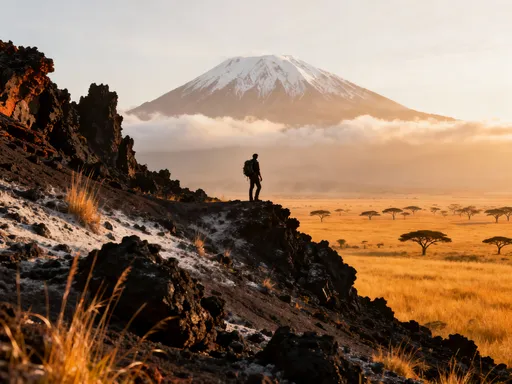
The final ascent to Uhuru Peak begins before dawn, a challenging climb over loose scree and steep inclines. But as the sun rises, painting the horizon in gold and crimson, the effort dissolves into awe. From the summit, the view stretches across the entire rift valley, with Kilimanjaro often visible in the distance, its snow-capped peak glowing in morning light. Below lies the Ngorongoro Crater, a vast green bowl teeming with life. In that moment, the connection between fire, time, and terrain becomes unmistakable. Mount Meru is not just a mountain; it is a storyteller, revealing the forces that have shaped this region over millennia.
Ngorongoro’s Crater: Nature’s Masterpiece
Just a short drive from Arusha lies one of the most extraordinary natural formations on Earth—the Ngorongoro Crater. At nearly 600 meters deep and covering over 260 square kilometers, it is the world’s largest intact and unfilled volcanic caldera. Formed when a massive volcano collapsed on itself over two million years ago, the crater has since evolved into a self-contained ecosystem, often described as an “Eden on the savannah.” Its walls rise steeply, enclosing a rich mosaic of grasslands, swamps, forests, and lakes, all sustaining a density of wildlife unmatched in East Africa.
What sets Ngorongoro apart is not just its scale but its completeness. Unlike national parks where animals migrate in and out, the crater supports a largely resident population. Here, more than 25,000 large animals live year-round, including elephants, buffaloes, hippos, and the rare black rhinoceros. Predators like lions and hyenas patrol the open plains, while flamingos gather in shimmering pink clusters along the alkaline shores of Lake Magadi. Every element—geology, water, vegetation, and fauna—works in harmony, creating a balance that feels almost intentional.
The geology of the crater plays a crucial role in sustaining this abundance. Rainwater collects within the basin, feeding springs and streams that nourish the land. Volcanic soil remains fertile, supporting lush grasses that attract grazers. Even the crater’s microclimate—cooler and wetter than the surrounding plains—contributes to its richness. For visitors, descending into the crater feels like entering a hidden world, one preserved by time and topography. Game drives offer close encounters with wildlife, but walking is not permitted, preserving the integrity of this fragile environment. The experience is humbling, a reminder that some places are too precious to be treated as mere backdrops for human adventure.
The Rift Valley’s Scar Across the Land
To the west of Arusha, the Earth splits open. The East African Rift—a tectonic boundary where the African plate is slowly tearing apart—carves a dramatic scar across the landscape. This is not a static feature but a living process, unfolding over millions of years. As the crust stretches and fractures, blocks of land drop down to form valleys, while others are pushed upward into escarpments. The result is a terrain of sharp contrasts: deep basins, elevated plateaus, and long, linear lakes that mirror the sky.
The rift’s presence is felt in subtle and dramatic ways. Hot springs bubble up along fault lines, their steam rising into the cool highland air. Fissures in the ground hint at deeper movements beneath. In some areas, ancient lava flows have hardened into black rock fields, frozen in time. The process is slow—continental plates move only a few millimeters per year—but the cumulative effect is monumental. Scientists believe that, in tens of millions of years, this rift could give birth to a new ocean, splitting East Africa from the rest of the continent.
For travelers, the rift offers both visual drama and intellectual wonder. Scenic viewpoints along the western escarpment provide sweeping vistas of Lake Eyasi and the Great Rift Valley beyond. The air is clear, the horizon vast. But beyond the views lies a deeper story—one of planetary transformation. Understanding the rift changes how one sees the land. A hill is no longer just a hill; it is a block of crust uplifted by tectonic force. A valley is not merely low ground; it is a space opened by Earth’s slow exhalation. This awareness deepens the travel experience, turning sightseeing into a form of quiet reverence.
Ol Doinyo Lengai: The Mountain That Breathes
Rising alone on the northern horizon, Ol Doinyo Lengai—known as the “Mountain of God” to the Maasai people—stands as one of the most unique volcanoes on Earth. Unlike most volcanoes that erupt silicate-rich lava, Ol Doinyo Lengai produces natrocarbonatite lava, a rare type that is cooler, blacker, and flows like motor oil. When it erupts, typically at night, the lava appears almost liquid, moving rapidly down the slopes before turning white in daylight as it reacts with moisture in the air. This surreal phenomenon makes it a site of both scientific fascination and spiritual significance.
The mountain remains active, with periodic eruptions recorded in recent decades. While climbing it is not for the faint of heart—requiring endurance, preparation, and respect for local regulations—those who make the ascent are rewarded with unparalleled views and a profound sense of connection to Earth’s inner workings. The trail passes through barren lava fields and steep inclines, culminating in a descent into the active crater, where fumaroles hiss and the ground feels warm beneath one’s feet. It is not a comfortable experience, but it is an authentic one.
For the Maasai, Ol Doinyo Lengai is sacred. They believe it is the home of Engai, their divine presence, and treat the mountain with deep reverence. Visitors are expected to honor this tradition, avoiding loud noises and maintaining a respectful demeanor. This cultural dimension adds depth to the physical journey. To stand on Ol Doinyo Lengai is not just to witness geological rarity; it is to step into a space where nature and belief converge. The mountain does not merely exist; it communicates—a quiet, persistent voice reminding us of forces beyond our control.
Hidden Valleys and Lava Trails
Beyond the well-trodden paths of Ngorongoro and Mount Meru lie quieter corners of Arusha’s wilderness—places where solitude and beauty coexist. The Momela Lakes, a chain of shallow, alkaline lakes near the base of Mount Meru, offer some of the most striking color contrasts in the region. Their surfaces shift from silver to pink depending on the light, reflecting skies filled with pelicans, flamingos, and kingfishers. Surrounding the lakes are ancient lava flows, their cracked surfaces covered in patches of moss and lichen, telling a story of fire long cooled.
Trails through this area allow for peaceful walking, often with views of Mount Meru towering in the background. Unlike busier parks, these zones see fewer visitors, making them ideal for mindful exploration. Birdwatchers, photographers, and those seeking quiet reflection find them especially rewarding. The interplay of color—green acacia trees against gray lava, turquoise water edged with white mineral deposits—creates a palette that feels almost painted, yet is entirely natural.
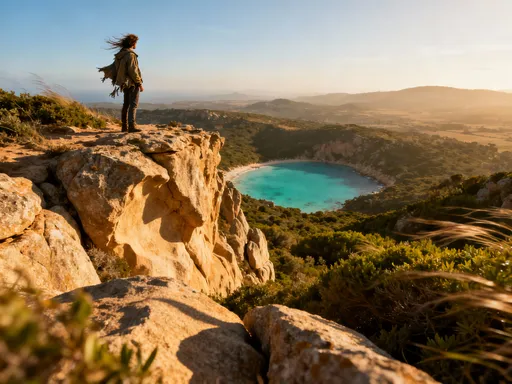
Other hidden gems include the Engare Sero lava flow, one of the youngest in Tanzania, and the ridgelines near Enduimet Wildlife Management Area, where panoramic views stretch across the rift and into Kenya. These areas are not always highlighted in guidebooks, but they offer a more intimate experience of Arusha’s terrain. They remind travelers that discovery is not always about grand vistas; sometimes, it’s about noticing the texture of a rock, the sound of wind through dry grass, or the way light falls on a distant slope. In these moments, the land speaks softly—but clearly—to those who listen.
Walking the Land: How to Experience Arusha’s Terrain Responsibly
Experiencing Arusha’s landscapes is a privilege, and with that comes responsibility. The best way to explore is with a certified local guide, whose knowledge enhances safety and deepens understanding. Guides can identify geological features, explain ecological relationships, and share cultural insights that enrich the journey. They also ensure that visitors follow established trails, minimizing impact on fragile ecosystems.
Timing matters. The dry seasons—from June to October and January to February—are ideal for hiking and wildlife viewing. During these months, trails are firm, visibility is high, and animals congregate around water sources. Rainy periods, while lush and green, can make roads impassable and increase the risk of landslides in certain areas. Proper gear is essential: sturdy boots, layered clothing, sun protection, and plenty of water. Altitude should not be underestimated, especially on Mount Meru or Ol Doinyo Lengai, where acclimatization is key to a safe and enjoyable experience.
Equally important is cultural respect. Many sites, including Ol Doinyo Lengai and parts of the Ngorongoro Conservation Area, hold deep significance for local communities, particularly the Maasai and Arusha people. Visitors should ask permission before photographing individuals, avoid loud behavior in sacred areas, and support community-based tourism initiatives. Choosing eco-friendly lodges, carrying out all waste, and avoiding single-use plastics are simple but meaningful ways to protect the environment. Conservation is not just the work of rangers and scientists; it is a shared responsibility.
By traveling mindfully, visitors do more than enjoy a beautiful destination—they become part of its preservation. Every footstep taken with care, every interaction conducted with respect, contributes to the long-term health of this remarkable region. And in return, the land offers something priceless: a chance to reconnect with the raw, untamed essence of our planet.
Conclusion: Where Earth Tells Its Story
Arusha is not a place you simply visit. It is a place you feel. Beneath your feet, the ground remembers fire. Around you, the air carries the breath of ancient volcanoes. Above, the sky stretches endlessly, framing peaks that have watched over this land for millennia. This is a region shaped by powerful forces—fire that builds mountains, time that carves valleys, and movement that reshapes continents. To walk here is to walk through Earth’s autobiography, written in stone, ash, and grass.
What makes Arusha truly special is not just its beauty, but its ability to awaken a deeper awareness. In a world where so much feels manufactured, controlled, or fleeting, this terrain reminds us of what is real and enduring. It speaks of cycles—destruction and renewal, stillness and motion, life emerging from lava. It invites us to slow down, to listen, and to recognize our place within a much larger story.
For travelers, especially those seeking meaning beyond the surface, Arusha offers a rare gift: authenticity. It does not perform for cameras or cater to trends. It simply exists, powerful and unapologetic. And in that existence, it calls to something deep within us—a longing to connect, to understand, to belong. So if you’re ready to step off the beaten path and into a landscape that speaks with the voice of the planet itself, let Arusha be your next destination. Walk its trails, breathe its air, and let the earth tell you its story. You might just find that it was waiting for you all along.